
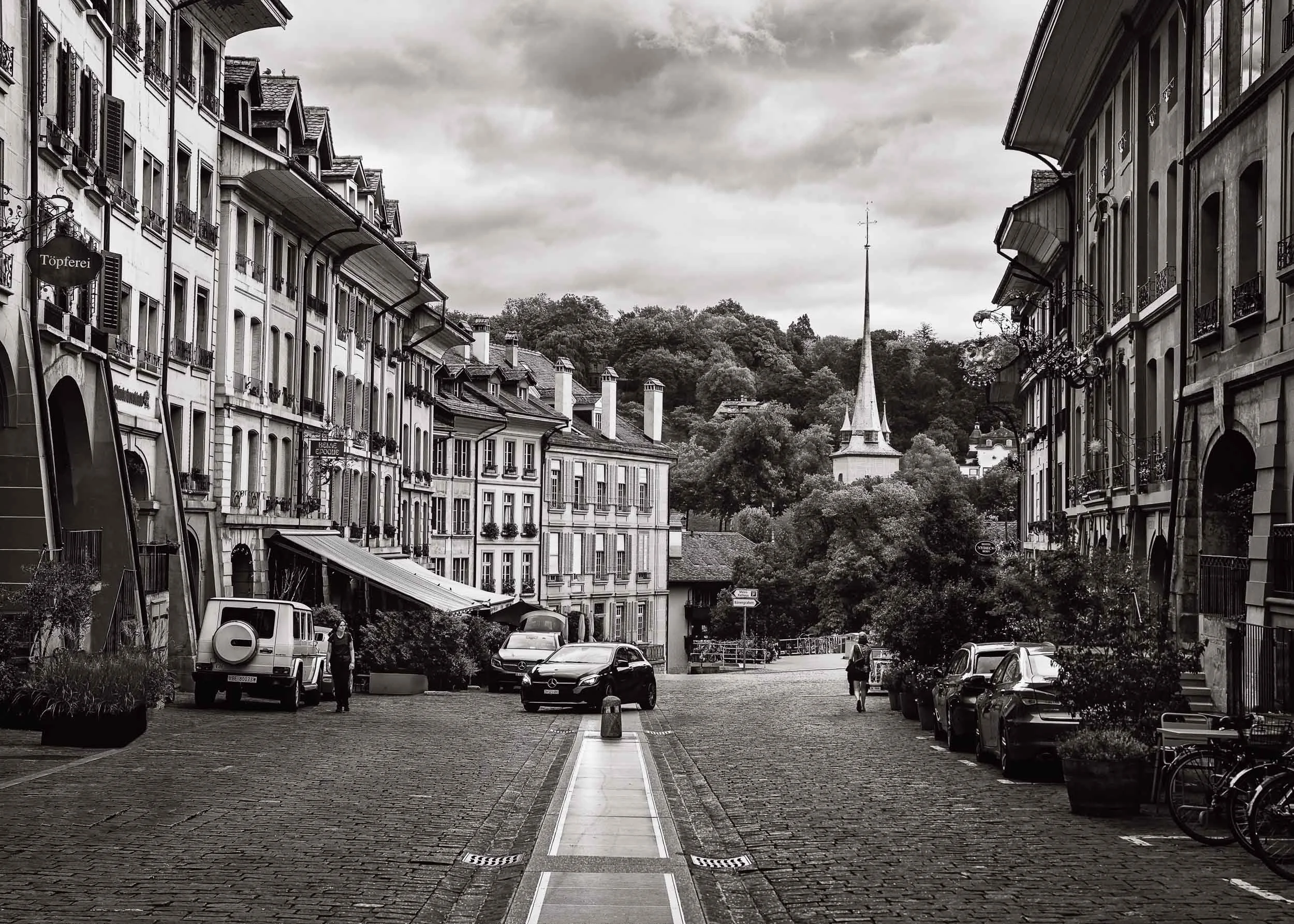
A City Without An Heir
Bern, Switzerland
When Berchtold V, Duke of Zähringen founded Bern in 1191, he meant it as a statement of order and authority at the edge of his domains, a city laid out to last longer than any prince. It became the axis of his power, a wager that stone and law might defy time.
He ruled at the height of Zähringen influence, strong enough to contend briefly for the imperial crown after the death of Emperor Henry VI, and wise enough to withdraw when the tide turned. In exchange, he secured lands, wealth, and influence without the burden of a fractured empire. Yet for all his political skill, succession eluded him. His only son died before him, and when Berchtold himself died in 1218, the Zähringen ducal line was extinguished.
What followed was dissolution. Bern and several other cities became free imperial entities, answerable to no duke at all. Other territories were divided among rival houses; Kyburg, Urach, and others, or reverted to the emperor, later feeding the rise of dynasties like the Habsburgs. The realm Berchtold shaped survived him, but his blood did not.
In the end, his legacy was a paradox: a founder whose greatest creation thrived only once it was free from his descendants. The House of Zähringen vanished, but its cities learned how to stand on their own.